

Chocolate’s bitter truth
An industry in crisis

This post was originally published on 21 March 2025.
A bitter truth
The chocolate industry is in crisis. Disease and extreme weather (both exacerbated by a changing climate) are impacting crop yields. That hurts cacao farmers (who earn less) and chocolate consumers (who pay more). But someone is profiting — see below for more on that.
The global price for cacao beans jumped 6-fold between 2022 and December 2024. That’s largely due to several consecutive poor harvests. Chocolatiers are passing more of that cost onto consumers. That helps explain recent falling demand in Asia, Europe, and North America, with further demand declines expected this year as prices continue to rise.
That’s bad news for everyone (unless you’re the rare person who dislikes chocolate).
— Joe Kraus, Aftershocks Editor
3 things to know
Cacao farmers and producer countries get an unsavoury deal. Farmers—millions of whom earn less than $1 per day—get just 6% of the final value of a chocolate bar. Côte d’Ivoire receives just 4% of the global chocolate industry’s value, despite producing roughly half of the world’s cacao.
So where’s the money going? If you guessed multinational corporations, claim your prize. The Hershey Company made $2.2 billion in profits in 2024, an increase of 20.5%. Not to be outdone, Mondelez International, which owns the Cadbury and Toblerone brands, made $4.6 billion. Its 4th quarter profits jumped by a cool 84%. Someone is getting richer, and it’s not farmers or producing countries.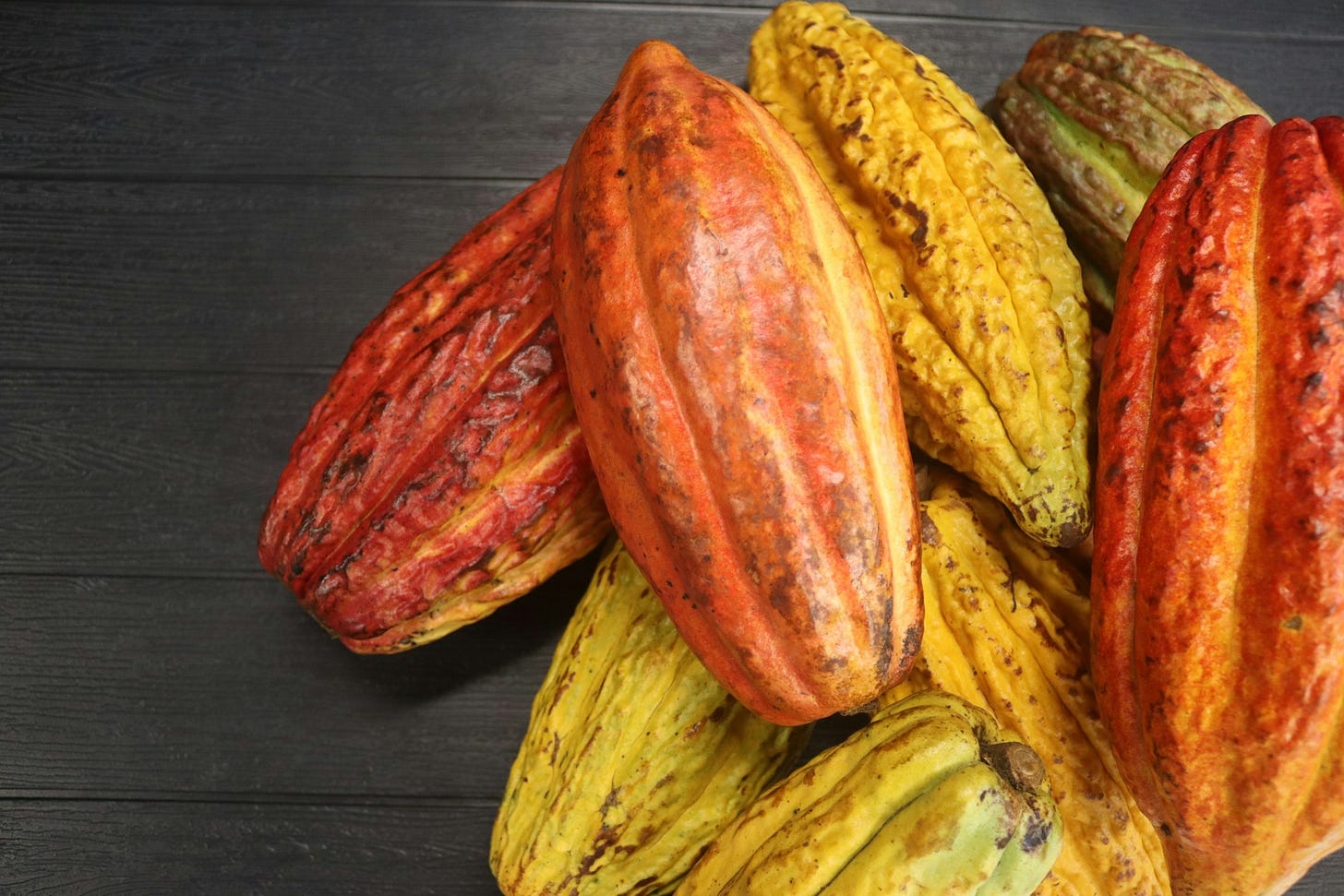
Climate change is threatening the livelihoods of cacao farmers. Cacao trees prefer temperatures below 32°C (89.6°F). Yet two-thirds of the cacao-growing region in West Africa experienced an additional six weeks above that range over the past decade. And rainfall has been wildly inconsistent, with deluges followed by drought.
What it means: High temperatures diminish the cacao tree’s ability to photosynthesise, which lowers production, as do floods and droughts. That’s made cacao farming an unpleasantly wild ride, and exacerbated lower harvests and higher prices.Proper fertilization can more than double cocoa yields. Ghana, Côte d’Ivoire, Nigeria, and Cameroon together grow nearly three-quarters of the world’s cocoa beans. That means improvements in West African farming—including practices to promote soil fertility—have a direct impact on the stability of global cacao availability.
Why it matters: By intensifying production on existing farmland, farmers have less need to clear forested land. Researchers estimate that 2 million hectares of West African forest could have been spared if farmers had had access to sufficient fertilizer to intensify cocoa cultivation instead of expanding farms. Yet with farmers’ incomes collapsing in recent years, they are struggling to afford the fertiliser needed to even maintain their trees. And with the gutting of USAID, which helped support fertilisation efforts on cacao farms across West Africa, farmers are losing an important ally.
FROM THE ONE TEAM:
ONE and partners hosted an event showcasing the impact of EU investments in global health in the European Parliament, supported by President Metsola and MEP Charles Goerens. The exhibition highlighted the impact of Gavi and the Global Fund and drew attention from policymakers and the media.
ONE’s German team rolled out a “carpet of facts” in front of the Ministry of Defence with a clear message: Germany needs an independent development agency and strong development cooperation.
If you’re attending the Skoll Foundation Forum, join David McNair to brainstorm big ideas to deliver impact in these turbulent times. David will also co-lead a session looking at the shifting geopolitics and the future of global development.
IN THE QUEUE:
US volatility could steer private capital toward African markets.
Overcoming sub-Saharan Africa’s health workforce paradox.
Millions of lives are put at risk by US aid cuts.
Nigeria and Kenya among nations running out of HIV drugs.